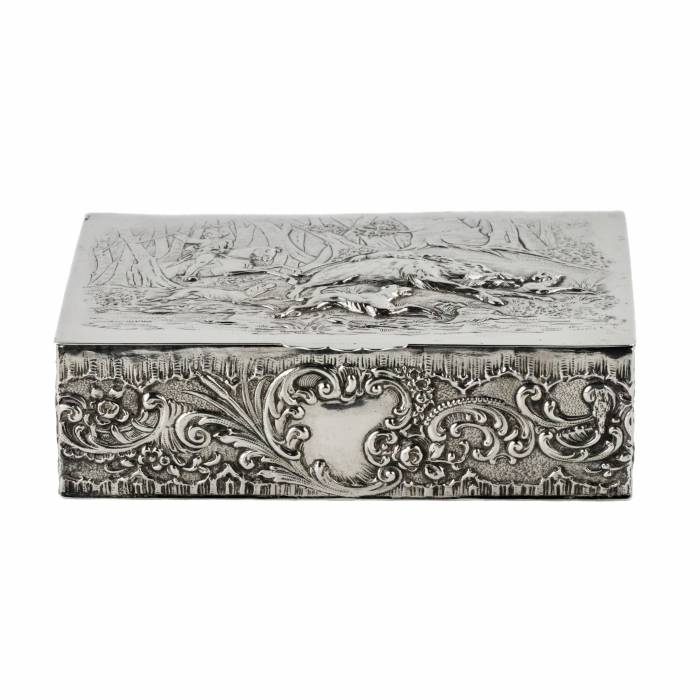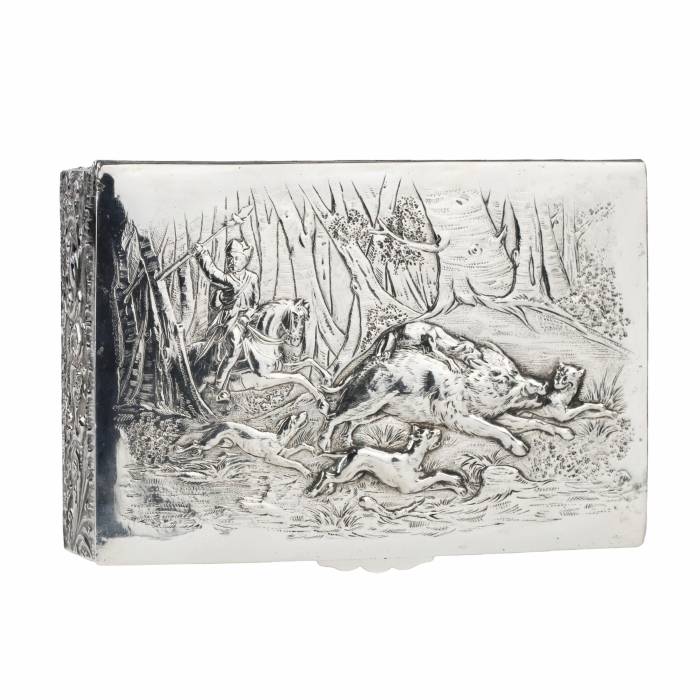

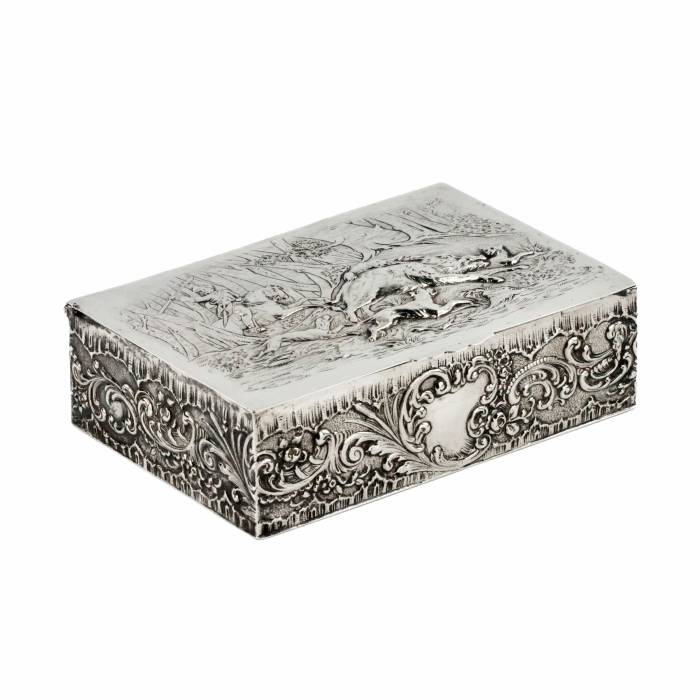
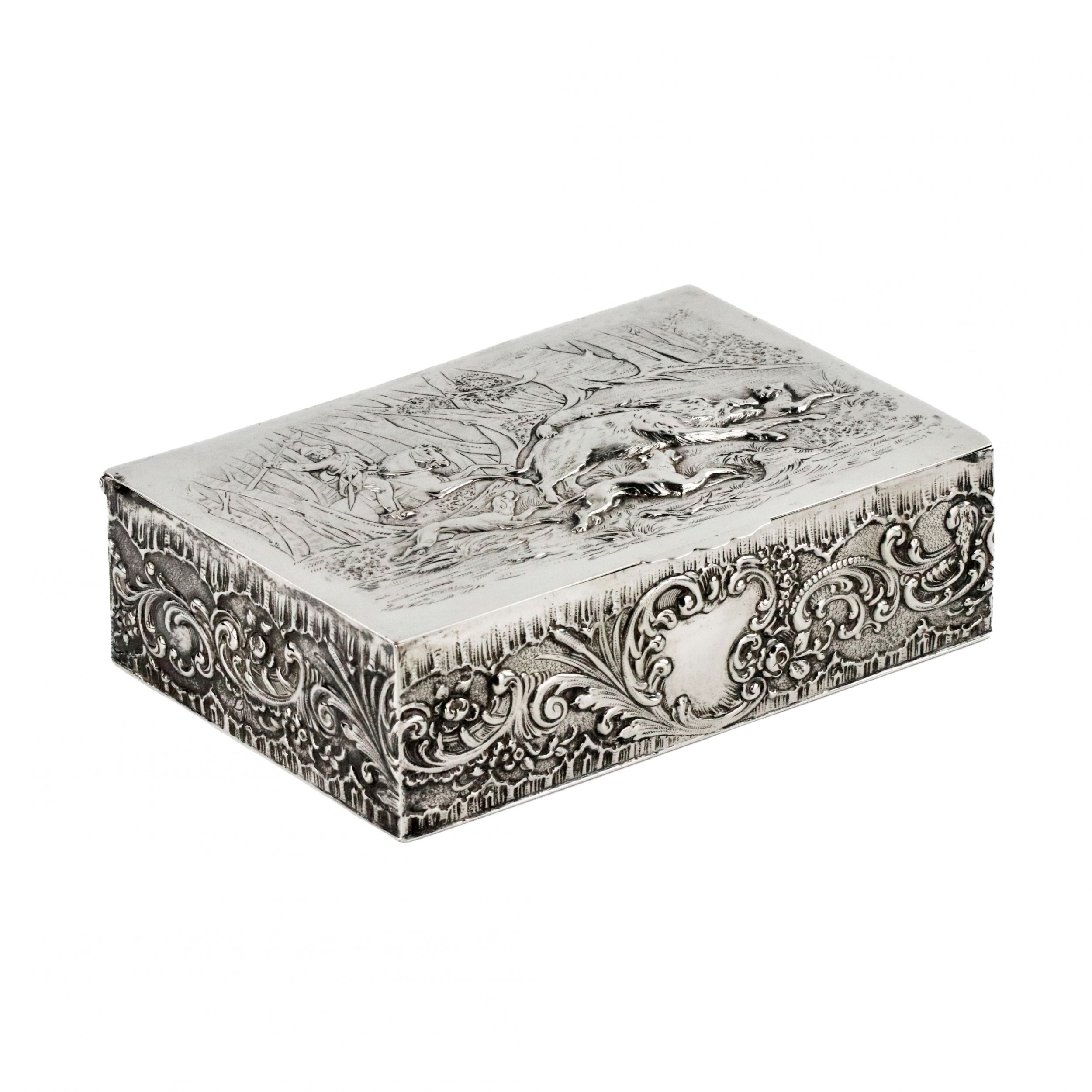
Boîte à cigares en argent avec une scène d`appâtage de sanglier. Le tournant des XIXe-XXe siècles.

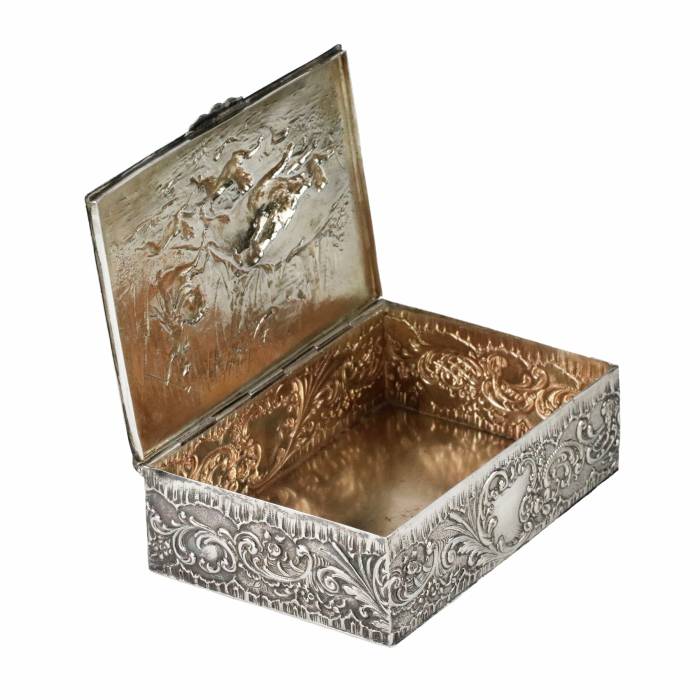
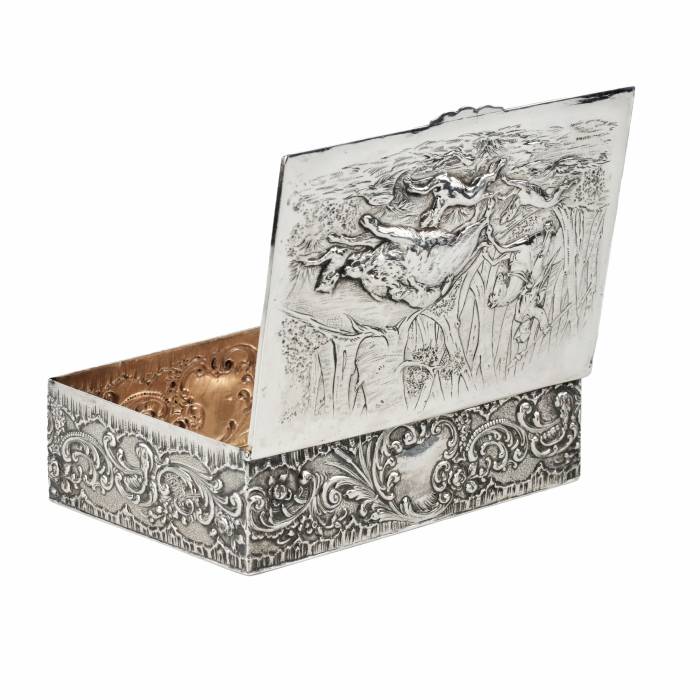
Boîte à cigares en argent avec une scène d`appâtage de sanglier. Le tournant des XIXe-XXe siècles.

ID-ANTQ-7835
1500 EUR
Add to cart
Request more info
Guarantee of Authenticity

At Antiqon ART, we build trust and value your choice. Every purchase of art and antiques with us is an investment backed by our expertise, reputation, and a 100% authenticity guarantee.

Price History

Discover how the value of similar works has evolved over the past 10 years. Art is not only beauty — it's an investment.

Complimentary Shipping & Returns

Antiqon ART offers free packaging, insurance, and delivery for most items purchased through the company. Exceptions include large and oversized items that require specialized packing and shipping.

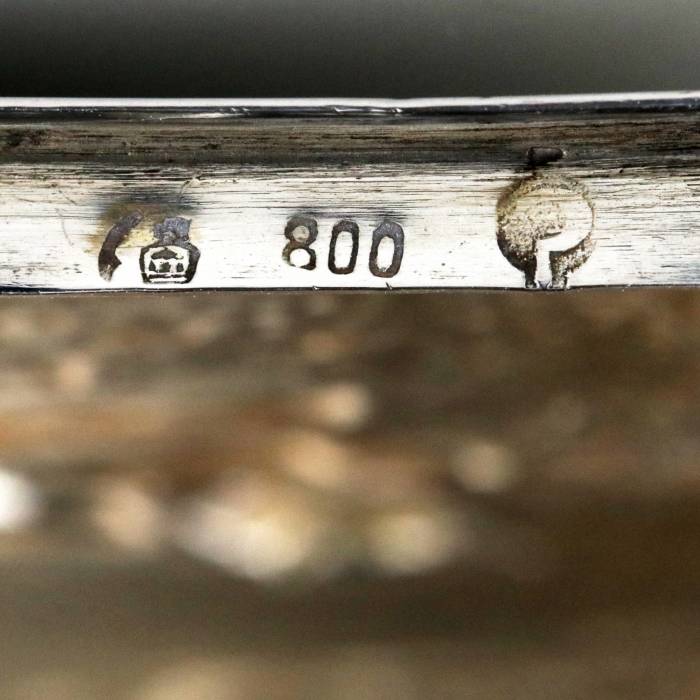
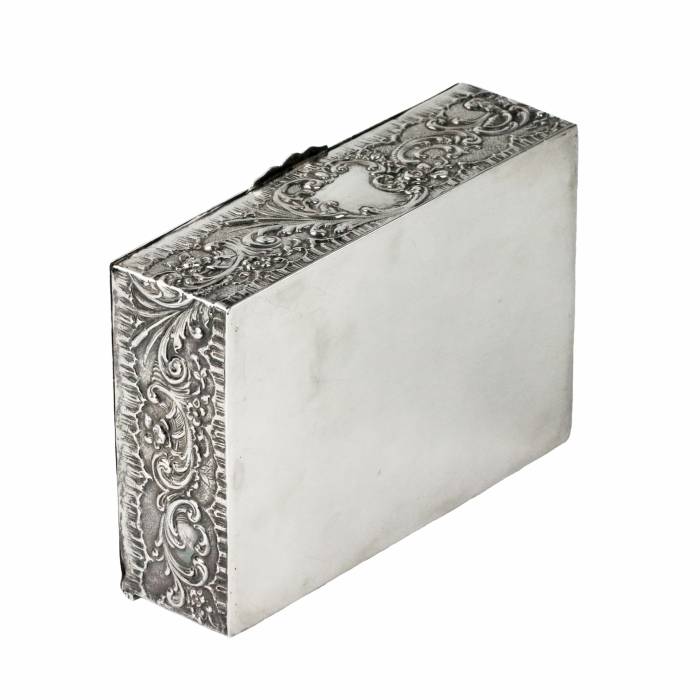
Boîte à cigares en argent avec une scène d`appâtage de sanglier. Le tournant des XIXe-XXe siècles. Les côtes sont ornes d`un ornement neo-roccaille. Argent, dorure. Dimensions : 5x17,5x13 cm Poids : 525 gr.
Art:
europe
Hauteur:
5 cm
Largeur:
17.5 cm
Épaisseur:
13 cm
Période:
Au Tournant Du Siècle 19-20
Style:
Éclectisme
Pays:
Europe
Matière:
Argent, dorure
État:
Revive
Fair
Good
Very good
Like new

The condition report is provided for informational purposes only.

It is not comprehensive and may not reflect all defects, restorations, alterations, or adaptations, as Antiqon does not perform professional conservation-level assessments. The information is based on a qualified, yet subjective, evaluation by our specialists.Before purchasing, we recommend consultation with an independent expert.Please also consult our Terms and conditions and Glossary A-Z, which contain important information on lot characteristics and sale conditions.

Neo-rococo
Neo-rococo, or the second rococo, is one of the stylistic trends that manifested itself in the period of historicism in the 19th century. Neo-Rococo is a rethinking of the characteristic features of the Rococo style that prevailed in the middle of the 18th century. The neo-rococo style found itself in architecture, interior design, furniture and household items design. The emergence of the neo-rococo style is associated with the restoration of the royal dynasty of the Bourbons and the completion of the Empire style in the first third of the 19th century. The chronology of the style is described by the reign of Louis XVIII and King Charles X (1824-1830). Sometimes the period of the reign of Louis Philippe (1830-1848) is also added to it. This time is called the style of Louis Philippe, or "the third rococo". After a tumultuous period of revolutions and wars, nostalgia for the "good old days" and the return of "royal styles" arose. Light, graceful and sophisticated forms of rococo perfectly embodied such moods. Neorocacious motives were also present in the products of the St. Petersburg cabinetmakers of the Gambs brothers in the 1850s and 1860s. In the Winter Palace in St. Petersburg, a boudoir designed by G.E. Boss in the "Pompadour style" (1853). The abundance of gilding, mirrors, red silk makes a spectacular but heavy impression. The same architect designed the dance hall in the mansion of Prince M.V. Kochubei on Konnogvardeisky Boulevard in the style of the second rococo (1853-1855). The dance halls in many mansions were designed primarily in rocaille style. A.I. Stackenschneider in 1847-1856 created a number of interiors of the Winter Palace in the neo-rococo style: the "pink drawing room" (not preserved), the "green dining room" (1850). In 1847-1851, the architect R.I. Kuzmin created several of the same interiors in the Arsenal square of the Grand Palace in Gatchina. It is significant that these interiors were adjacent to the "Gothic" and "Chinese" galleries. During the Art Nouveau period, along with other styles, the fourth Rococo emerged. The Small (White) dining room in the Winter Palace was designed in this style, designed by architect A.F. Krasovsky (1894).
... Read More

Stay up to date with new arrivals
Save Argent Européen and we let you know when new listings appears in this category
Sauvegarder

Related items